Bloomberg
Doesn't Understand
Franchising
and Their “Expert” Understands It Wrong.
There is a specific and dangerous kind of business story that gets written about industries the writers have never worked in. Bloomberg's Odd Lots produced a textbook example last week: a full episode on franchising, zero franchisees, royalty numbers off by up to 4X, and an expert who conceded on tape that he had never made the one comparison his entire thesis depends on.
Franchising is 832,521 open businesses, 8.8 million jobs, and roughly 3 percent of US GDP. It is scheduled to add 12,000 more locations this year. It deserves better than this, and it is getting worse than this at the exact moment Congress is deciding its future.
Their episode, "How Franchise Restaurants Opened the Door to the Gig Economy." The guest was Brian Callaci, chief economist at the Open Markets Institute, whose book is subtitled The Rise and Cruel Reign of the Franchise Economy. His summary of what franchisees are: basically a middle manager for a large corporation, with a little more risk.
The episode aired July 24, and three days earlier the House Education and Workforce Committee had voted 18 to 15 to advance the American Franchise Act, the bill that decides whether the people they talk about in that episode get to keep owning their businesses. This is not a history podcast. It is a live policy fight, and one side of it just got 45 minutes on Bloomberg without a single operator.
I am a second-generation operator; my family's brand, Churromania, franchises 150+ locations in 10+ countries. I also help hundreds of operators across the world automate their back of house with our Clave AI Agents. So let me point at the thirty seconds that should have ended the episode.
Near the end, Joe Weisenthal made the only comparison that matters: franchised restaurants versus independent restaurants. He even said why: we romanticize small business, but wage theft, safety violations, and business survival rates are often worse at independents.
Callaci said he had not looked at that comparison. Then he agreed it was probably a fair case.
Categorically Wrong
Comparison
Every comparison in this podcast is franchised units against company-owned units of the same brand.
Nobody has ever faced that choice. You do not walk into a bank and pick between franchising a McDonald's and being handed a salaried GM job at a corporate store. The real decision is: buy into a proven system, or open your own place and figure it out.
That comparison exists, he just didn't run it.
- U.S. Census Bureau states franchise establishments average $3.5M in annual sales versus $2.3M for non-franchise establishments.
- A study by Lafontaine (Michigan), Zhang (LBS) and Zapletal show new single-unit franchised businesses survive year one 6.3 points better than independents, 8.4 points better at two years. About 5 to 6 points after controlling for selection.
- Bureau of Labor Statistics says that 20.4% of new businesses die in year one. 49.4% within five years.
Lafontaine is herself a franchising skeptic, and her paper shows the gap closes once you survive two years. And that is the argument for franchising. The premium lands exactly in the window where first-time owners putting up their savings actually die.
The Obvious Advantage
of a Franchise System
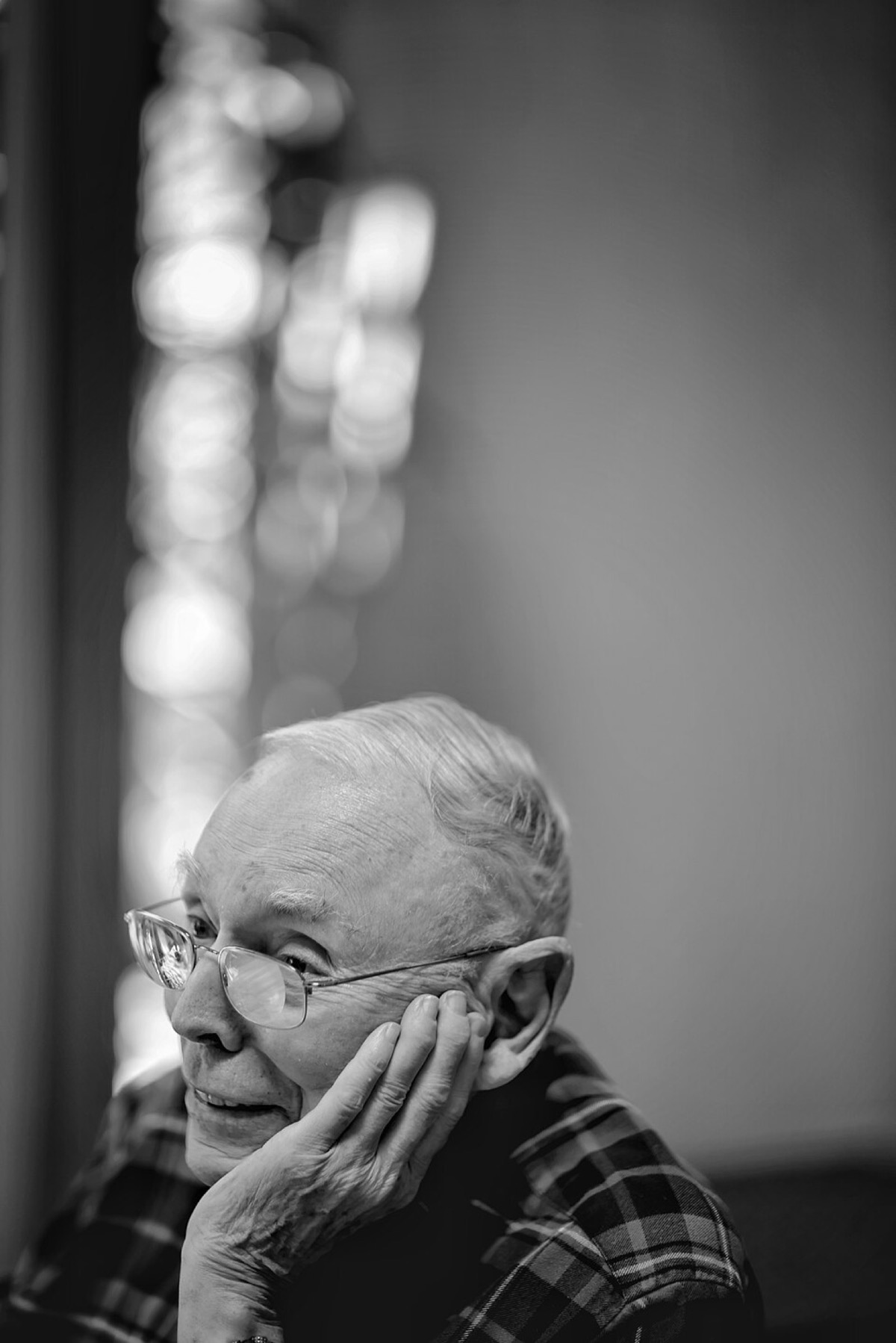
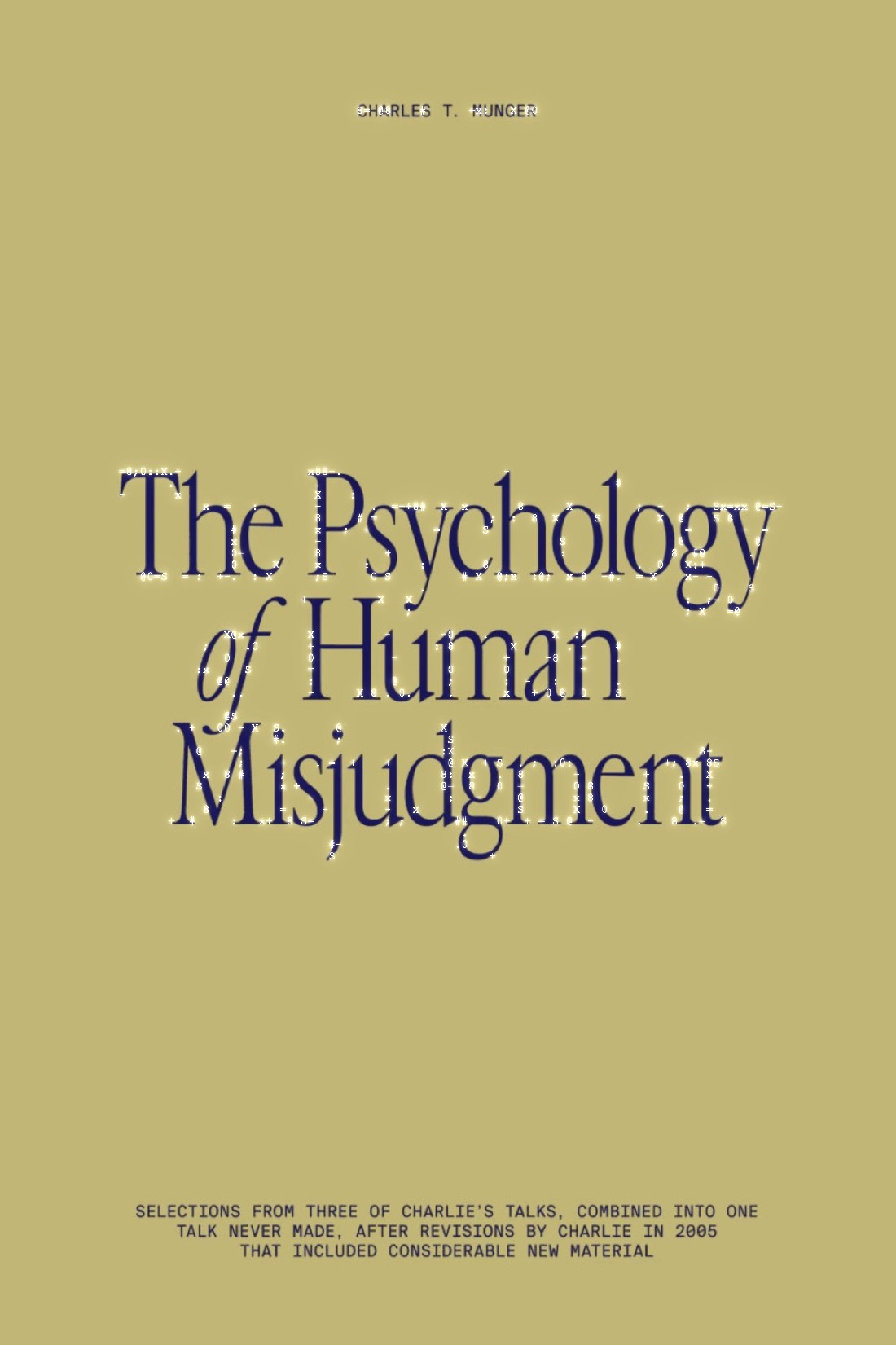
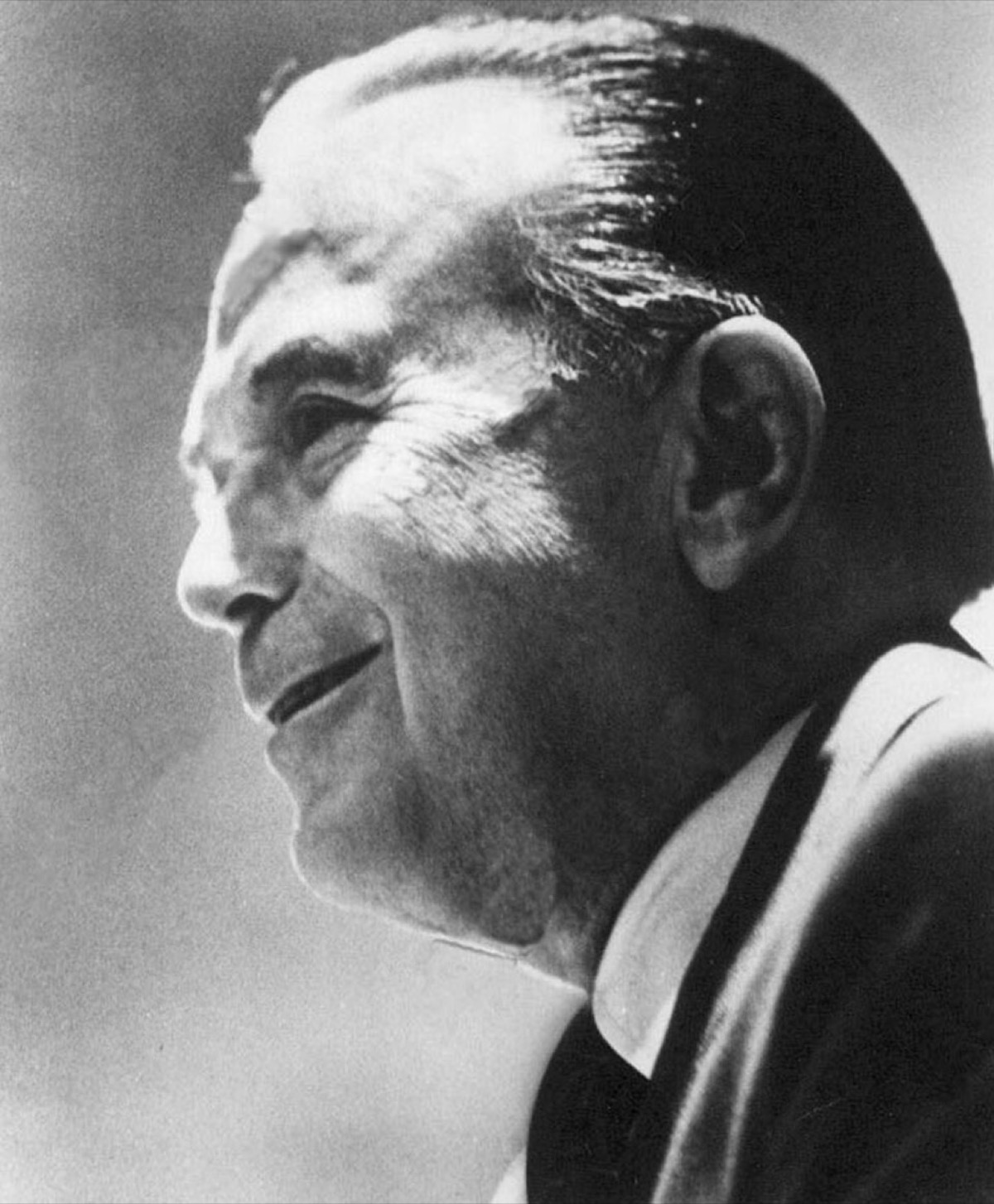
In Charlie Munger's 1986 commencement address at the Harvard School in Los Angeles, he sarcastically lays out a set of prescriptions for a miserable life. Here is number two:
"My second prescription for misery is to learn everything you possibly can from your own experience, minimizing what you learn vicariously from the good and bad experiences of others, living and dead. This prescription is a sure-shot producer of misery and second-rate achievement.
You can see the results of not learning from others' mistakes by simply looking about you. How little originality there is in the common disasters of mankind: drunk driving deaths, reckless driving maimings, incurable venereal diseases, conversion of bright college students into brainwashed zombies as members of destructive cults, business failures through repetition of obvious mistakes made by predecessors, various forms of crowd folly, and so on."
Munger put business failures through repetition of obvious mistakes made by predecessors in a lineup with drunk driving deaths. That is the independent restaurant failure rate. It is not bad luck and it is rarely a bad idea; it is somebody making, for the first time, a mistake that ten thousand people already made, documented and solved.
A franchise agreement is a contract to not do that. It is vicarious learning, priced and sold. You are buying the accumulated error correction of every operator who came before you, which is the most valuable but least glamorous asset in this business.
Forty-six minutes on franchising, and not one minute on that.
Munger said it another way in 1994, at USC, talking about chain stores:
"You get this huge purchasing power, which means that you have lower merchandise costs. You get a whole bunch of little laboratories out there in which you can conduct experiments. And you get specialization. If one little guy is trying to buy across 27 different merchandise categories influenced by traveling salesmen, he's going to make a lot of dumb decisions...
The reverse is demonstrated by the little store where one guy is doing all the buying. It's like the old story about the little store with salt all over its walls. A stranger comes in and says to the store owner, "You must sell a lot of salt." And he replies, "No, I don't. But you should see the guy who sells me salt."
The franchisee is the chain store in that comparison, and the independent is the guy with salt all over his walls. Every negotiation the brand already ran is a negotiation the operator does not have to lose first.

What Comes in the
Franchising Box
Franchises are audited yearly by CPAs on behalf of the FTC, acting more like banks than restaurants in this way. According to Federal law, 16 CFR 436.5(k), every franchisor must open Item 11 of its disclosure document with one sentence, in bold caps.
Then they must enumerate everything they will do and cite the exact section of the franchise agreement that makes it enforceable. This is a schedule of contractual deliverables, and it's based on decades of experience and relationships built by the brand.
“Except as listed below, [the franchisor] is not
required to provide you with any assistance.”
Where to buy your ingredients
Subway's purchasing co-op, IPC, is owned by the franchisees and reports saving members nearly $3 billion since 1996, moving 75 million cases a year. Yum's co-op, RSCS, runs $5.8 to $7 billion in annual purchasing for 20,000+ restaurants, jointly owned by Yum and all its domestic franchisees. Burger King's RSI has paid patronage dividends to members every year since it started.
How to open the location
The FTC requires franchisors to disclose the exact factors they use to select sites. Behind those factors sit entire teams running sales forecasting models calibrated against thousands of stores with known outcomes. An independent operator's site selection process is standing on a corner counting cars.
How to build it and how it should look
Prototype drawings, equipment specs, buildout schedules, approved contractors, all priced against a system that has already made every expensive mistake. The independent designs the kitchen once, learns what is wrong with it during the first Saturday rush, and lives with it for ten years.
How to market it
McDonald's US systemwide advertising was $2.1 billion in 2024. A store doing $1.5M pays 4%, which is $60,000, and buys into a $2.1 billion campaign.
How to get market share
YouGov has McDonald's at 97% brand fame. An independent opens to whoever happens to be walking by.
How to get and keep employees
Hamburger University opened in 1961 with 14 students. It has now graduated more than 300,000 people, teaches in 28 languages, and requires 12 to 18 months of competency-based training before you get a store. The American Council on Education recommends college credit for the curriculum, and 1,800+ colleges accept it.
How to give good service
The operations manual, incorporated into the contract and updated as the system learns. Thirty years of somebody else's mistakes, already paid for.
And how to build the product
Which is where the episode goes furthest off the rails, so it gets its own section below. Taco Bell alone generates well over 1,000 ideas a year and ships about 40. The franchisee pays for none of the 960 that die.
Franchisees'
Banana Republic
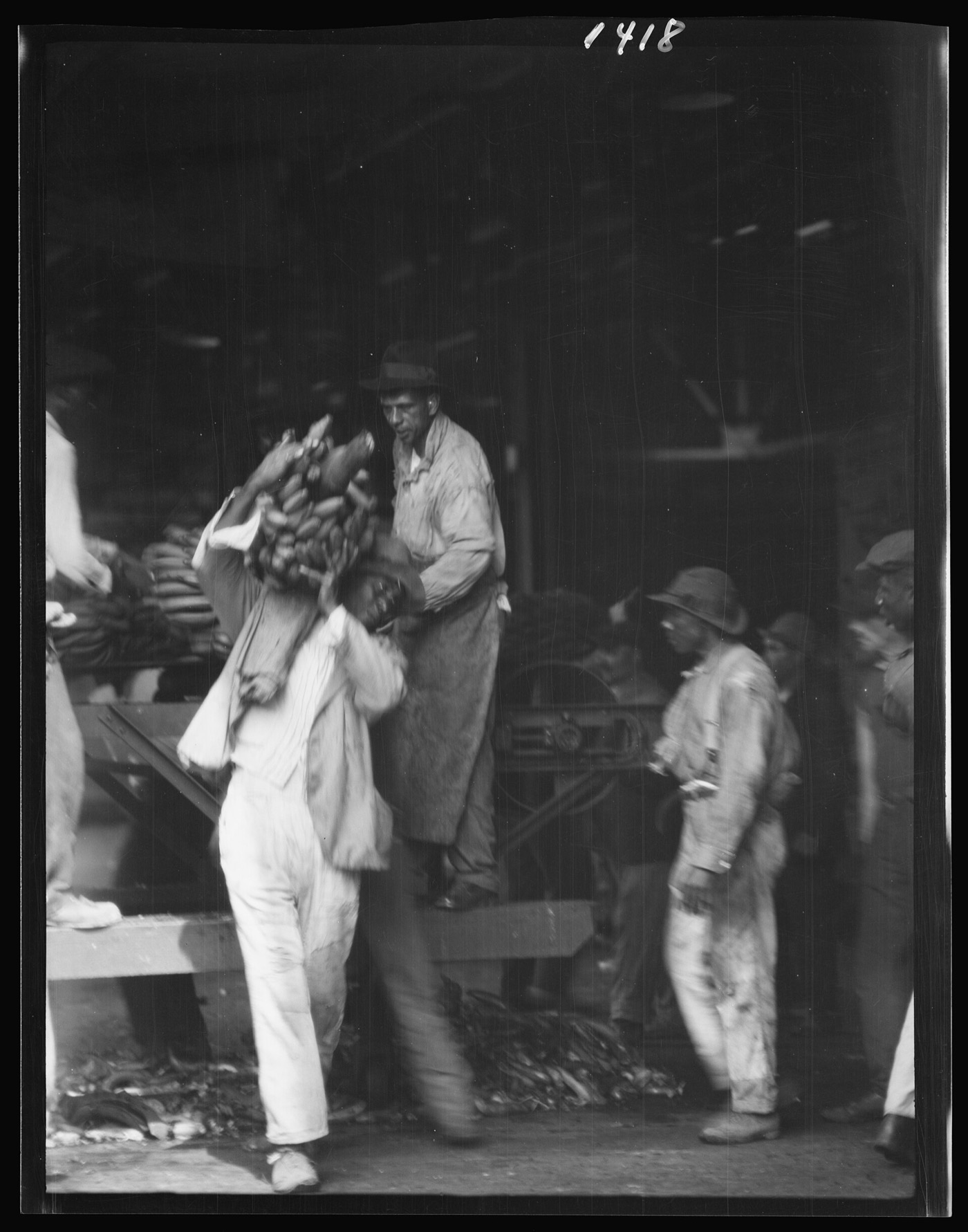
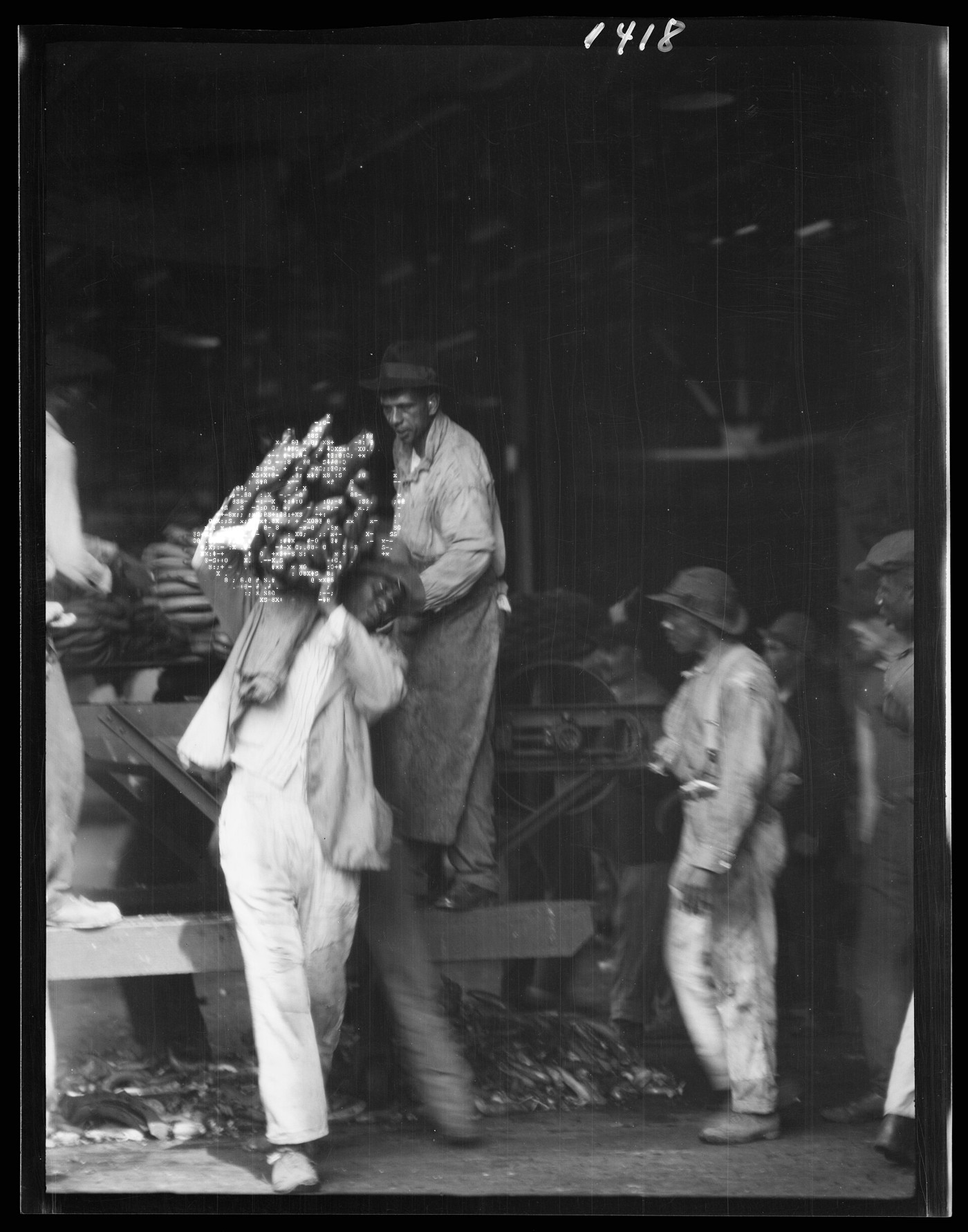
Callaci's marquee illustration of franchising as an evil is a Dunkin' franchisee who became obsessed with bananas. Every other ingredient in the store was locked to approved suppliers, so bananas were the one input still left to the operator's discretion, and he chased the price around local grocery stores. Callaci tells this as a portrait of a man with nothing left to control.
Seen from a different perspective, the one item the system did not specify is the one item the operator had to go solve himself, badly, at retail, driving to a Stop & Shop on his own time.
That is the equivalent of Munger's salt, one aisle over at the Stop & Shop. Everything the franchisor sourced arrived at a discounted negotiated price on a scheduled truck. The one thing that did not, the guy paid retail for and burned his own hours chasing. The bananas are not evidence of a cage, but rather proof the franchise system exists for a reason.
The broader version of the complaint is that franchisees do not get to set their own menu or product mix. He quotes another book approvingly for the line that an entrepreneur makes the worst franchisee, because you do not want someone with their own business ideas. Tracy asks how maddening it must be when corporate rolls out a sandwich nobody likes.
Of course franchisees do not design their own menu. That is the product franchisees bought.
Taco Bell's food innovation team in Irvine is roughly 60 people: food scientists, chefs, packaging engineers, mechanical engineers, nutritionists. They generate well over 1,000 ideas a year and ship about 40. Around 100 consumers a week run blind taste tests through a cubby in a wall. The test kitchen replicates different line configurations by restaurant square footage, so crew can tell them an item is impossible to build at volume before it ever touches a real store.
McDonald's runs Speedee Labs, 21,000 square feet in Chicago, with two kitchens, a drive-thru simulator for testing menu boards and service scripts, a prototyping lab, and a resident restaurant team of about 60 crew and managers.
Chick-fil-A has a 35,000 square foot food innovation center with four test kitchens.
That is what the 960 rejected ideas cost, and the franchisee pays for none of it. An independent operator who wants to add an item runs that experiment on live customers, with their own inventory, and finds out on the P&L six weeks later.
Ray Kroc gets quoted in the episode saying it does not take any particular aptitude or intellect to succeed in one of his restaurants, just grit and hard work, and it's offered as an insult to franchisees.
Read the other way, he is describing a system engineered so that the idea part is already solved and what remains is execution. That is not a knock on the operator. That is the entire promise, and it is why a first-generation immigrant with no culinary R&D budget can open a store and compete.
Ask any entrepreneur, investor, or founder what is most important between the idea and the execution and every single one of them will say the latter.
Ideas are a dime a dozen. Perhaps the bluntest statement comes from Elon Musk, who put it plainly: ideas are somewhat trivial, but the execution of good ideas is extremely difficult. "Prototypes are easy, production is hard. Production and being cash flow positive is excruciating pain," as captured in The Book of Elon. Leonardo da Vinci's biography gives us the memorable line "Vision without execution is hallucination," but Walter Isaacson pairs it with the reverse truth: "Skill without imagination is barren" in Leonardo Da Vinci. Leonardo's genius was marrying the two.
A franchise hands you one of them, finished.


The Price
of Knowledge
Callaci said royalties run "usually between 6 and 20 percent." That is not what the disclosure documents say.
Across 2,200+ franchise disclosure documents, the average ongoing royalty is about 6% of gross sales, median 5 to 6%. In quick service it runs closer to 5%. Add the brand fund and most major QSR systems land between 9% and 11% all in. Subway sits at the top at 12.5, and it is the outlier he generalized from.
So roughly 90 cents of every dollar stays in the operator's business. That 90 cents is before food, labor, rent and debt service, and the fee is charged on gross sales rather than profit.
The one place his number gets close is McDonald's, which is a landlord as much as a franchisor. Its 2025 10-K shows $10.4 billion of rent versus $6.0 billion of royalties, with percentage rent at 8 to 15% of sales. A McDonald's operator can send 17 to 24% to Oak Brook. That is occupancy, not a licensing fee. Every restaurant pays rent to somebody, independents typically 6 to 10%, the difference here is McDonald's owns the dirt.
| System | Royalty | Brand fund | All in |
|---|---|---|---|
| McDonald's | 4 to 5% | 4% | 8 to 9% |
| Burger King | 4.5% | 4.5% | 9% |
| Taco Bell | 5.5% | 4.25% | 9.75% |
| Subway | 8% | 4.5% | 12.5% |
| Industry average | ~6% of gross sales | median 5 to 6% | 9 to 11% |
| Claimed on the episode | "usually between 6 and 20 percent" | ||
Franchises
Build Legacies
This is now the dominant structure. 19.3% of franchisees are multi-unit operators, and they control 58.8% of all franchised locations.
And these are not people who already had crazy capital. Census data has 30.8% of franchise businesses minority owned against 18.8% of non-franchised businesses. VetFran puts veteran ownership at 14% of all franchises, double the veteran share of the population. When PwC ran the numbers for the IFA, veteran-owned franchises averaged $2.1 million in gross receipts against $445,487 for veteran-owned businesses generally, and employed 12.3 people against 3.
- Flynn Group booked $4.78 billion in revenue in 2024 across roughly 2,900 restaurants, with an estimated ~$500M EBITDA. Dine Brands Global, the franchisor of Applebee's and IHOP, reported $879 million in revenue and $220M adjusted EBITDA for 2025. Which would you rather be?
- Sun Holdings operates 227 Papa John's and did $2.3 billion, more than Papa John's International at $2.05 billion.
- Yadav Enterprises, a franchisee, was part of the group that bought the Denny's brand outright for $620 million in January 2026.
Middle managers do not buy the company.
Law &
Order
The American Franchise Act, H.R. 5267, was introduced by Rep. Kevin Hern of Oklahoma, himself a former McDonald's franchisee, with Democratic co-lead Rep. Don Davis of North Carolina. It has roughly 148 cosponsors.
It would write into the NLRA and the FLSA that a franchisor is a joint employer only if it "possesses and exercises substantial direct and immediate control" over the essential terms of a franchisee's employees, and that setting brand standards, requiring training, or mandating operational systems does not by itself create that liability.
The joint employer standard has flipped four times in a decade, and this bill would largely codify the standard the NLRB already operates under. Its function is to stop the next reversal.
If franchisors become joint employers of the franchisee's employees, incentives flip upside down. If a franchisor becomes legally liable for employment decisions inside 830,000 businesses it does not own, it will not accept that risk quietly. No company accepts liability for choices it cannot make. It will instead take the choices itself. Hiring, firing, scheduling, wages, discipline.
At which point, why keep the franchisee at all? The franchisor is now carrying the liability, making the labor decisions and setting the standards. The only thing the franchisee still supplies is capital and effort, and the alignment that made that effort worth more than a salary is gone. So, brands refranchise into company-owned stores and put a salaried GM in the box.
“I would cease to be an independent small business owner and would be subject to the directives of a large corporation, as a de facto employee of a corporate brand.”
And the damage is not mainly to the operators who already made it. It is to everyone behind them.
Franchising is the on-ramp, and it is the only on-ramp still widening. Decker, Haltiwanger, Jarmin and Miranda have spent a decade documenting the secular decline in American business dynamism: firm entry rates falling since the 1980s, and the share of US employment sitting inside young firms cut roughly in half, from about 20 percent to about 10. One of their papers is titled "Where Has All the Skewness Gone?" The country is producing fewer new business owners every decade.
Franchise establishments over the same recent stretch: 788,683 in 2022, then 808,911, 821,837, 832,521, and a projected 845,009 for 2026. Straight up, through a pandemic hangover, an inflation spike, and the worst small-business credit market in fifteen years.
It is how somebody with savings, a willingness to work and no brand, no credit history, no supplier relationships and no network gets to own a real business. Close the opportunity and you do not liberate the "oppressed" franchisees. You convert potential ones into applicants for a real middle-management job and take away everything in that Item 11 list. They go back to learning it all from their own experience.
A critique built on the claim that franchisees are not really independent would, if it wins, produce the world where that is finally true.
Callaci's
Truths
No-poach clauses were real and indefensible, and Callaci's own study found removing them raised worker earnings 4 to 6%. He deserves credit for that work. They were also eliminated by state AG enforcement between 2018 and 2020, which he acknowledged on air.
Weil's finding of higher wage-and-hour violations at franchised versus company-owned units is legitimate, even if it still is not the comparison that matters. Fee stacking and technology fee creep are real fights inside this industry right now.
Even the gig economy critique may well be right on its own terms. Delivery and rideshare drivers deserve better than they have.
The error is assuming the framing transfers. A franchisee owns a transferable business, and that is measurable. Cotei and Farhat, tracking the Kauffman Firm Survey's 2004 startup cohort over eight years, found franchises were 2.77 times more likely than independent businesses to exit through acquisition. That paper is not friendly to franchising; it found no survival advantage at all, and says so in its title: "Thinking about starting a franchise business? Think again." It still found franchisees roughly three times more likely to reach the exit every small business owner is actually working toward.
Scale it up and those exits get real. Bain Capital bought Sizzling Platter, a 1,100-unit multi-brand franchisee, at a $1.29 billion enterprise value on $165 million of EBITDA in 2025, and PE firms are starting to scale the franchisee buyouts as opposed to brands. There is no version of that for a gig worker.
Joe's closing observation was that franchising cuts off the left tail and the right tail. He said it like a criticism, but if you are putting your family's savings into one store, cutting off the left tail is the entire product.
Callaci
vs. Me
Callaci's model of technology runs one direction. Data flows up to corporate and corporate disciplines the operator. His framework has no category for tooling that flows information back down to the person running the store.
That is my job. The operator running seven systems that do not talk to each other, closing books by hand on a Sunday night, is not being surveilled. They are being under-served. And the gap between the $205K store and the $275K store is usually information, not cruelty.
Franchising is vicarious learning sold at a price a working person can afford. It is how people with no brand, no credit history and no network get to own something real, without having to personally rediscover every obvious mistake their predecessors already made. My family has spent decades handing that system to exactly those people, and I have watched what franchisees have built with it.
There is a good critique of franchising to be written; about fee stacking, technology fee creep, encroachment protection, and Item 19s that actually tell operators the truth before they sign.